Переместимся в Колумбию и укажем номерной знак на шлеме.
Эквадор: остановились в городе Сальседо, который был промежуточной точкой, а Кито проехали транзитом, направляясь в Колумбию.
По новостям,
панамериканское шоссе в южной Колумбии, которое было закрыто из-за демонстраций Национальной организации коренных народов Колумбии (ONIC) с 30 мая, открылось сегодня, 13 июня. Хорошо, хорошо. Скорее всего, несколько дней будет продолжаться беспорядок, но я надеюсь, что через три дня, когда я проеду, все вернется в более-менее нормальное состояние. Конкретно, похоже, что закрытие было в регионе департамента Каука в южной Колумбии, где находится город Попаян.
По сообщениям, на недавней встрече 12 июня было достигнуто определенное согласие, но некоторые участники решили продолжить забастовку в северной Колумбии. Если верить новостям, то места, через которые я проеду, не должны быть затронуты. Что ж.
http://www.elcolombiano.com/colombia/se-levanto-el-paro-en-el-cauca-con-el-compromiso-de-nuevas-reuniones-JY4375685
И вот мы прибыли в город Ибарра, в северной части Эквадора.
Отсюда, до пригородов Боготы, сильны позиции наркотических и вооруженных организаций, поэтому, как и при движении на юг, я буду ограничивать ежедневный пробег и передвигаться в светлое время суток. Я планирую выезжать около 9 утра и прибывать в пункт назначения не позднее 3 часов дня. В основном, я буду двигаться по основным дорогам.
И вот, въезд в Колумбию.
Этот путь подходит к концу.
В Колумбии выбросы автомобилей самые высокие из всех стран Южной Америки, которые я посетил, и вокруг много черного дыма.
В Колумбии (особенно в Боготе?) необходимо, чтобы на задней части шлема был наклейка с теми же символами, что и на номерном знаке, поэтому я попросил в мотосервисе наклеить такую наклейку. Многие люди не клеят такие наклейки, поэтому неясно, насколько это распространено, но мне ее наклеили за 5000 песо (180 иен).
Говорят, что это было сделано из-за того, что высокопоставленные лица подвергались нападениям на мотоциклах. Хм.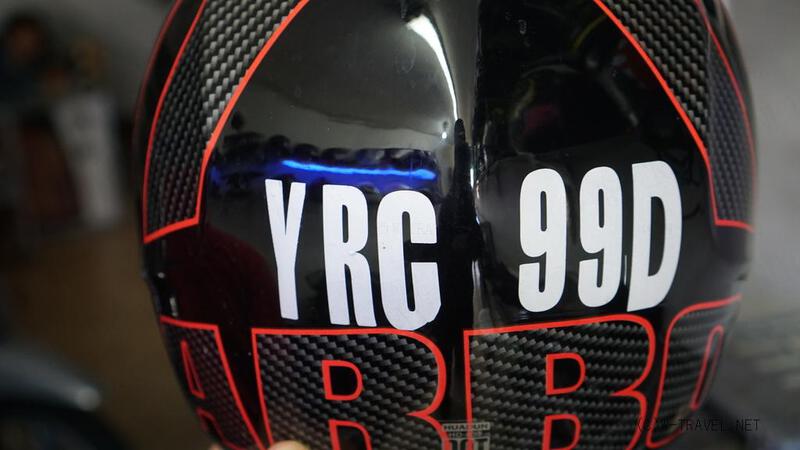
Панк.
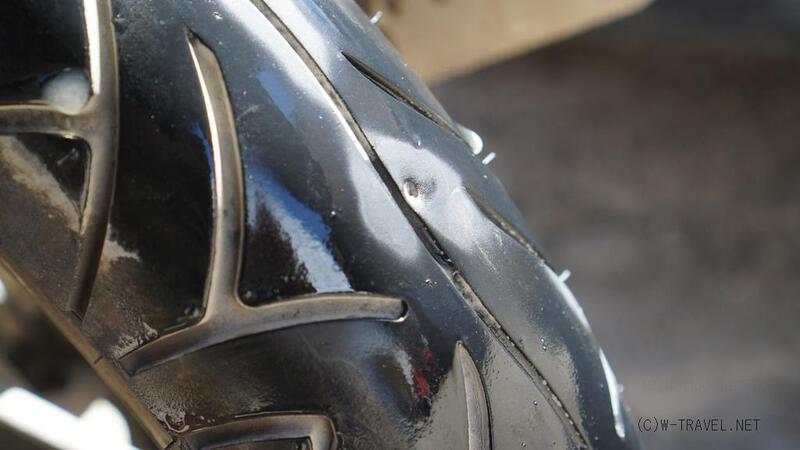
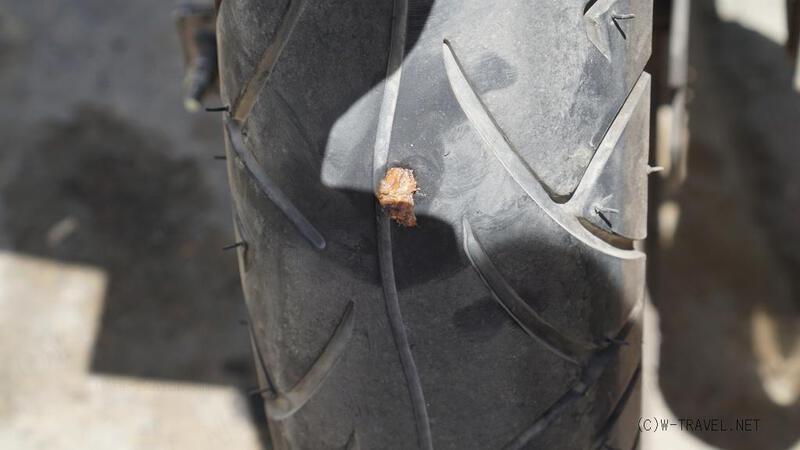
Покрышка пробита.
На самом деле, вероятно, она была пробита еще во время моей последней поездки, когда я услышал громкий звук. Утром, когда я проснулся, давление в шине было снижено примерно наполовину. Бескамерные шины отлично держат давление.
Это уже вторая пробитая шина в этом путешествии.
Осталось всего 1000 километров до финиша, и пробитая шина – это невезение, но то, что это случилось сегодня, когда я проехал небольшое расстояние, – это, наоборот, удача.
И еще одна удача в том, что я нахожусь в городе, и в 500 метрах отсюда есть мастерская по ремонту шин.
Но!
В этой мастерской по ремонту шин мастер не использовал ремонтный комплект, а просто вставил кусок резины отверткой и сказал: "Так будет нормально". Это, скорее, временная мера... Но, с другой стороны, я понял, что в критической ситуации можно сделать так же, так что, наверное, это было неплохо.
Затем я отвез шину в официальный сервисный центр, где недавно меняли масло, и там, в соседнем магазине, мне ее нормально отремонтировали.
Я рад, что отвез ее на нормальный ремонт, потому что, когда я потрогал этот кусок резины, который использовали как временную меру, он сразу же порвался, и воздух вырвался с силой.
Оба ремонта стоили 4000 песо (150 иен).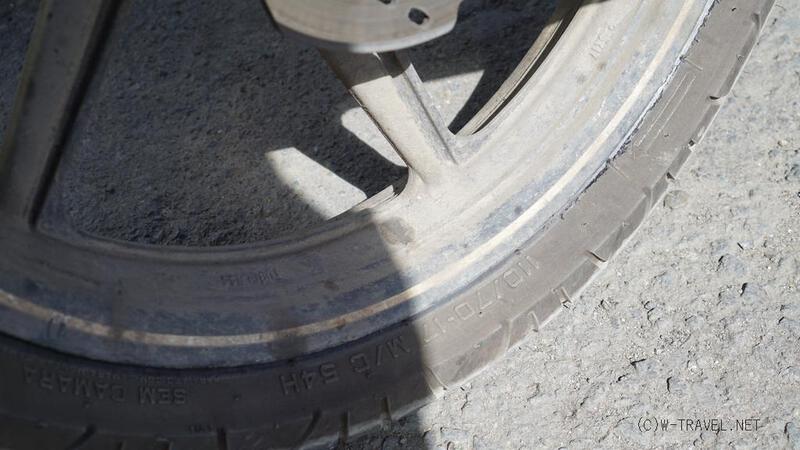

 Затем, двигаясь на север, мы пересекли территорию, прилегающую к границе, и находящуюся в зоне риска 3 по классификации Министерства иностранных дел, и вошли в зону риска 2.
Поскольку этот маршрут проходит по основным дорогам, там есть военная охрана, поэтому, кажется, мотоцикл безопаснее, чем автобус. Похоже, что в зоне риска 2, в городе Кали, опаснее, чем на основных дорогах, находящихся в зоне риска 3.
Затем мы прибыли в Ибаге, расположенный в 250 км от Кали. До Боготы осталось 200 км, мы почти у цели.
Движение стало более интенсивным, но я надеюсь, что завтра, в воскресенье, будет немного свободнее.
Завтра, в воскресенье, мотоциклетные мастерские не работают, поэтому в понедельник я отвезу мотоцикл в мастерскую и доберусь до финиша.